
Reducing Costs in Copper Ore Processing Plant
August 20, 2025
Given the declining ore grades in many established mining regions and rising energy costs worldwide, cost optimization in a copper processing plant is urgent. ZOOMJO GROUP provides advanced solutions and mining equipment at competitive prices to help you reduce costs while maintaining production quality and meeting environmental standards.
With global copper demand projected to grow steadily—driven by electrification, renewable energy expansion, and digital infrastructure development—processing operations must innovate to remain profitable. As a result, mining companies are turning to technological innovations, process optimizations, and strategic operational changes to achieve significant cost reductions. This article explores the most effective strategies being implemented across the industry to reduce operational costs in copper ore processing, drawing on real-world examples and the latest technological advancements.

One of the most promising approaches to reducing operational costs in copper mining involves implementing intelligent scheduling technology that leverages IoT, big data, and advanced algorithms. Traditional manual scheduling methods often lead to substantial inefficiencies, with some mines experiencing equipment utilization rates as low as 68% compared to international standards of 85% 1. This nearly 20% gap in utilization represents a significant opportunity for cost savings through improved operational efficiency. For example, one operation in China achieved an 18% increase in equipment utilization and a 12% reduction in energy consumption through such systems. These improvements directly translate to lower operating costs per ton of processed material, significantly enhancing the operation profitability.
Modern heap leaching techniques have emerged as a game-changer for cost-effective copper extraction, particularly from low-grade ores that would otherwise be uneconomical to process. The latest advancements in this field have boosted copper recovery rates by up to 15% compared to traditional methods
The integration of bioleaching technologies represents another frontier in cost reduction. Specially adapted bacteria, such as Acidithiobacillus ferrooxidans, can dramatically accelerate sulfide ore oxidation, reducing the need for chemical inputs like sulfuric acid. Bioleaching is particularly valuable for processing refractory sulfide ores that are difficult and expensive to treat using conventional methods.
Comparative Cost Analysis of Copper Processing Methods
| Processing Method | Capital Costs | Operating Costs | Energy Consumption | Suitable Ore Types |
|---|---|---|---|---|
| Conventional Flotation/Smelting | High | High | Very High | Sulfides, higher grade |
| Traditional Heap Leaching | Moderate | Moderate | Low | Oxides, some sulfides |
| Advanced Heap Leaching (2025) | Moderate | Low-Moderate | Very Low | Oxides, secondary sulfides |
| Integrated Bioleaching | Moderate-High | Low | Low | Refractory sulfides |
Energy consumption typically represents 30-40% of operational costs in copper processing, making it a prime target for cost reduction initiatives. Heat recovery systems capture energy that would otherwise be wasted from various processing stages, particularly smelting and refining operations. Strategic electrification and renewable energy integration also offer substantial cost reduction opportunities. Even relatively simple equipment upgrades can yield impressive returns.
The abrasive nature of copper ores makes equipment wear a significant operational cost factor. Implementing advanced wear protection strategies can dramatically extend equipment life and reduce maintenance expenses, downtime, and replacement costs. Recent developments in materials science have yielded remarkable solutions to this perennial challenge.
The next frontier in wear protection involves predictive maintenance systems that combine advanced materials with embedded sensors to monitor wear in real-time. These systems allow for planned rather than emergency maintenance, further reducing downtime and operational costs while optimizing component replacement schedules.
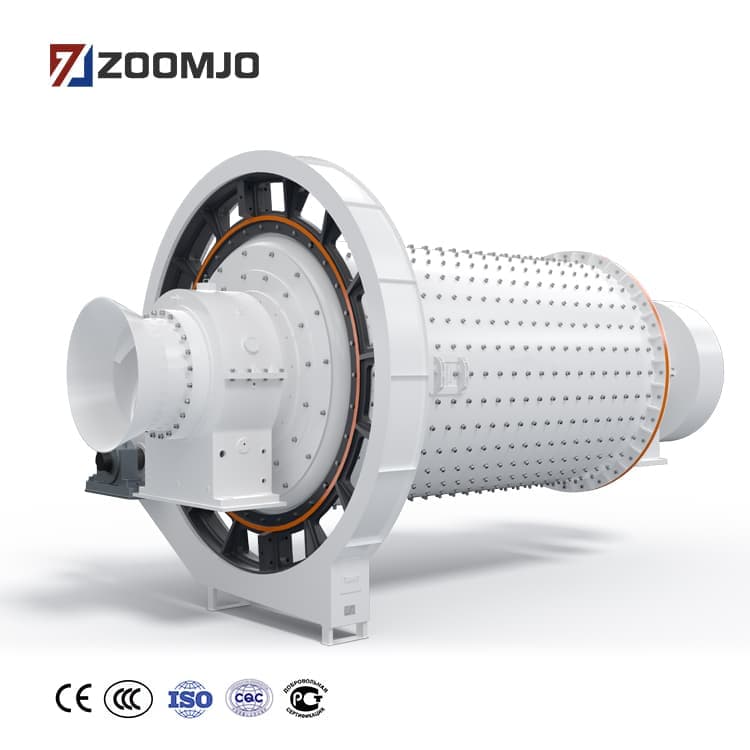
ZOOMJO GROUP is professional mining machinery manufacturer and supplier, offering complete quality and durable equipment in copper processing plant.
Beyond technological investments, strategic process optimizations can yield substantial cost savings with minimal capital investment. Sometimes, simple changes to operational sequences can deliver remarkable results, as demonstrated by Xingan's experience with copper slag processing. By merely changing the sequence of their process from "slag first, then lead" to "lead first, then slag," the company achieved an 11.1% increase in daily processing capacity (from 162 tons to 180 tons) while significantly reducing consumable costs.
This seemingly simple change produced impressive reductions in multiple cost areas simultaneously:
Natural gas consumption decreased by 8.7%
Iron filings usage reduced by 23.4%
Coke particle consumption lowered by 20.8%
Soda ash consumption reduced by 21.2%
Such holistic improvements demonstrate that comprehensive process analysis can identify opportunities that transcend simple equipment upgrades or automation initiatives. The most effective cost reduction programs combine technological advancements with critical evaluation of existing processes and procedures.
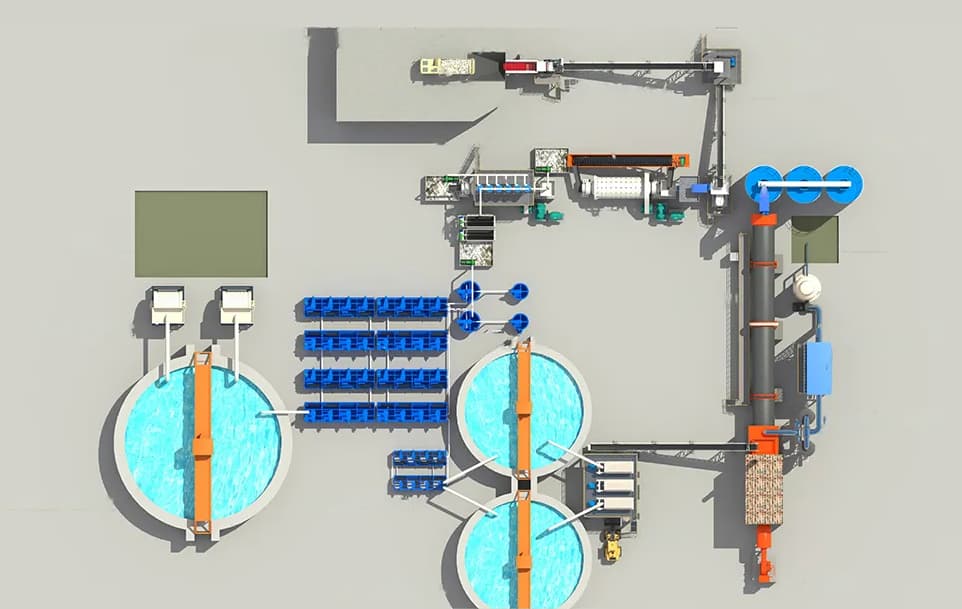
ZOOMJO GROUP has rich experience in copper ore processing, and engineers can provide best solution, flow sheet and equipment configuration according to your materials, capacity, budget and other requirements.
Workforce training and engagement also play crucial roles in operational efficiency improvements. Well-trained operators who understand not just how but why processes work can identify inefficiencies and contribute to continuous improvement efforts. Companies that invest comprehensively in both their technologies and their people typically achieve the best and most sustainable results in cost reduction initiatives.
A comprehensive circular economy approach that maximizes resource utilization while minimizing waste and environmental impact. Their strategy includes:
Comprehensive recovery of precious metals from copper processing streams
Waste heat recovery systems that capture and reuse thermal energy
Water recycling systems that minimize freshwater consumption
Solar power integration that reduces grid electricity purchases 10
This holistic approach has generated annual savings of approximately $30 million while simultaneously reducing the company's environmental footprint and strengthening community relations—a powerful demonstration that economic and environmental objectives can align rather than conflict.
A company implemented a comprehensive technical transformation of its electrolytic process, leveraging excess capacity in its converter and anode furnace systems while optimizing electrolytic technology. The project resulted in a 50% increase in production capacity of high-value-added cathode copper products. Similarly, their arsenic removal transformation project generated annual cost savings exceeding $1.5 million, dramatically improving both economic performance and environmental compliance.
Operational Cost Reduction Strategies and Typical Impact
| Strategy Category | Specific Measures | Typical Cost Reduction | Implementation Timeline |
|---|---|---|---|
| Smart Scheduling | IoT sensors, optimization algorithms, centralized control | 10–15% operational cost reduction | 6–12 months |
| Advanced Wear Protection | ULC coatings, predictive maintenance | 30–70% maintenance cost reduction | 3–6 months |
| Energy Efficiency | Heat recovery, equipment upgrades, solar integration | 15–25% energy cost reduction | 6–18 months |
| Process Optimization | Sequence changes, parameter optimization, circular economy | 5–20% variable cost reduction | 1–6 months |
| Advanced Extraction | Heap leaching improvements, bioleaching integration | 20–40% processing cost reduction | 12–24 months |
Reducing operational costs in copper processing requires a multifaceted approach that combines technological innovation, process optimization, strategic investments, and organizational engagement. The most successful operations recognize that cost reduction is not a one-time project but an ongoing cultural commitment that must permeate all levels of the organization.
The path to lower processing costs doesn't necessarily require massive capital investments; rather, it demands careful analysis, strategic thinking, and a willingness to challenge conventional approaches. Companies that embrace this mindset will position themselves strongly for long-term success regardless of market conditions.
Do you need to know the product price? Model? Configuration plan? Output?
Please leave your correct information and we will reply to you within 24 hours.

E-mail: sales-zjks@zoomjo.cn
Mobile: +86-13938216895
WhatsApp: +86-13938216895
Add.: Zhouzhuang Industrial Park , Fengshou Road East Section, Demonstration Zone, Jiaozuo


Copyright © Henan ZOOMJO MINING Machinery Co., Ltd. All Rights Reserved.